
Code of Ethics – Our Quality Policy

Costa d’Oro, established in 1968, operates in the food sector of vegetable oils

vertical-bar
In respect of the environment and social reality

Costa d’Oro, established in 1968, operates in the food sector of vegetable oils, particularly olive oil, in both foreign and domestic markets, under its own brand as well as third-party brands.

On May 14, 2018, La Costa d’Oro became part of the Avril Group, adhering to the code of ethics and group policies. The reference documentation for these can be found in this Integrated Manual under section 0-Avril. This strategic move positions La Costa d’Oro to become the third-largest global group in the olive oil industry.

The company’s general guidelines are focused on the concepts of continuous improvement, both in terms of processes and performance. It is believed that only by operating within a framework of documented and shared rules can the company fulfill its mission.

The formulation and dissemination of the company’s “policy” are reinforced through the constant supervision of the management, viewing it as a tool that significantly contributes to the continuous development of the company. This includes achieving customer satisfaction and serving as an essential instrument for managing internal projects that bring about genuine technological innovation.
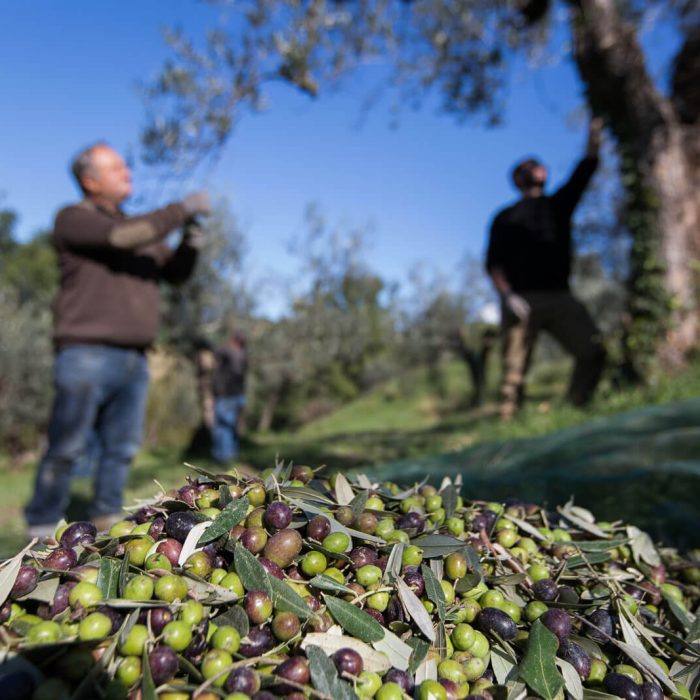
coltivatori-frantoiani-Costa-d-oro

Costa d’Oro has decided to focus its attention on the health and safety of its workers and anyone operating within its production site, while also respecting the surrounding environment and social reality.

The company has implemented its management system in compliance with the OHSAS 18001 and SA8000 standards, seeking certification from third-party organizations. The Integrated Management System ensures the dissemination of policies and acts as a cohesive force among different departments, serving as an organizational engine and overseeing activities in support of management.

The policy, defined by the management, will regulate procedures and various processes and will always have common characteristics, including:

  • Ensuring compliance with laws, regulations, and current standards, as well as voluntary certifications that La Costa d’Oro adheres to.
  • Continuous analysis of processes and adaptation of procedures.
  • Identification of professional roles and responsibilities involved.
  • Holding managers accountable for the quality of performance delivered by their employees.

Furthermore, considering the company’s ongoing commitment to worker protection, La Costa d’Oro commits to:

  • Identifying specific quality indicators used as management tools and for evaluating the effectiveness of actions.
  • Preventing and reducing environmental impacts, risks, accidents, and illnesses related to the company’s activities by implementing and enforcing the provisions outlined in the Integrated Management Manual, procedures, and operational instructions.
  • Exercising control over all processes, identifying requirements and critical impact areas.
  • Continuously monitoring the management of significant safety aspects through impact control to avoid or manage incidents whenever possible.
  • Constantly informing, raising awareness, and involving staff, both within the company and those employed by suppliers/subcontractors, sub-suppliers, or home-based workers, through appropriate training, participatory measures, and consultation. This approach makes them active participants in the implementation and execution of the management system in compliance with applicable laws, regulations, current standards, and voluntary certifications that La Costa d’Oro adheres to.
  • Promoting environmentally-responsible and safe practices among suppliers and, where possible, customers, through targeted awareness and involvement initiatives.
  • Ensuring full respect for workers’ rights, both within La Costa d’Oro and its suppliers, by adhering to the requirements defined by the SA 8000 standard, labor laws, other applicable laws, the collective labor agreement, and other agreements signed by the company, when more favorable to workers. Additionally, the principles set forth in the International Labour Organization (ILO) conventions, as indicated in the SA8000 standard, the Universal Declaration of Human Rights, the United Nations Convention on the Rights of the Child, the United Nations Convention on the Elimination of All Forms of Discrimination against Women, the International Covenant on Economic, Social and Cultural Rights, the International Covenant on Civil and Political Rights, and the United Nations Convention on the Elimination of All Forms of Racial Discrimination will be observed.
  • Conducting all plant installation activities in a manner compatible with environmental protection and worker health and safety, as well as optimizing environmental performance through constant research and improvement of production activities.
  • Managing documentation, procurement of goods and services, maintenance, and technical and organizational changes appropriately by evaluating and proposing sustainable and innovative solutions, including identifying the best applicable technologies.
  • Minimizing the risk of both significant and non-significant accidents, ensuring that the level of risk is compatible with the safety of workers, the population, and the surrounding environment.
  • Properly planning emergency situations that may occur within the company and at installation sites, including improvements to work environments and conditions.
  • Updating and verifying the adequacy of the policy based on the objectives periodically set by the company.
  • Communicating and disseminating this policy to all relevant internal personnel (employees) and making it available to external stakeholders.
  • Raising awareness among all strategic stakeholders and actively involving suppliers in the ethical and quality standards adhered to by La Costa d’Oro.

Let us not forget the attention that La Costa d’Oro pays to its wide range of products, with particular emphasis on the selection of raw materials and ensuring safety while consistently meeting the requirements and expectations of all our customers.

It is essential to remember that La Costa d’Oro:

  • Ensures the authenticity and safety of the oil sold, as it is a food product.
  • Guarantees customer satisfaction and safety, especially the end consumer, in terms of packaging (hygiene and safety), product quality, accuracy of label information, adherence to hygiene standards during processing, and compliance with regulations to ensure authenticity and build trust in the goods sold by our company.
  • Strives for continuous improvement in various areas of the company to satisfy customers and consistently produce a better product that is consistent in quality, enjoyable in taste, and meets not only the current regulations but also the quality and ethical standards it adheres to.
  • Offers excellent service connected to sales, surpassing competitors and satisfying customers.
  • Ensures the achievement of the company’s profitability objectives and increases its value for shareholders.
  • Enhances effectiveness and efficiency in various internal and external areas and activities of the company through process improvement, cost reduction, waste and scrap reduction, without compromising the food safety of products.
  • Upholds ethical and moral values, guaranteeing complete transparency in professionalism.

These commitments underscore La Costa d’Oro’s dedication to delivering genuine, safe, high-quality products while continuously striving for improvement, customer satisfaction, and ethical practices.

Unfiltered-method-Costa-dOro-olive-oil.jpg

To make the level of our quality standard objective and understandable, Costa d’Oro made the decision in 1996 to obtain the endorsement of an external audit company that would make the reference model more explicit, oversee its implementation, and provide guidance for improvement over time.

Costa d’Oro was the first Italian company in the sector to be certified according to the ISO 9002 standard by the demanding and prestigious certification body, DNV (Det Norske Veritas).
Certifications that attest to the quality and transparency of the company

In line with our principles, the company decided to certify its financial statements (despite no legal obligation) in the same year it obtained ISO certification (1996).

After achieving certification according to the ISO 9001:2000 standard, Costa D’Oro obtained certification according to the BRC (British Retail Consortium) standard, aiming to ensure compliance with the highest hygiene and sanitation standards, which have become essential to meet the expectations of increasingly discerning consumers.

With the certification of the food safety management system according to the UNI EN ISO 22000:2005 standard, Costa d’Oro further demonstrated the importance placed on the food safety of its products within the company.

In response to market demands, in October 2009, Costa d’Oro obtained certification according to the rigorous IFS (International Featured Standards), achieving the highest level. The most recent reference model for Costa d’Oro is the ISO 22005 standard. The company decided to align its management and traceability systems with the requirements of this standard to provide customers with product lines that combine quality with the assurance of control throughout the production chain, from olives to bottled products.

In 2018, the company made the decision to formalize its long-standing ethical commitment to respect towards customers/consumers, suppliers, and workers through SA8000 certification. This certification recognizes the dedication, professionalism, and loyalty of the employees, who have always been the true wealth of the company.
Certificazione SA 8000

Certifications

Since one of the main requirements of the mentioned standards is to identify and meet the needs and expectations of the active and potential customer base in the industry in which the company operates, the first activity to be carried out is to monitor market trends and consumer demands through business contacts and marketing analyses. This helps measure the level of satisfaction and set new objectives and standards.

To ensure customer satisfaction, employee well-being, and the attainment of appropriate quality while respecting the environment, the main activities will focus on ensuring the following:

  • Food safety of our products through rigorous monitoring of every critical phase of the production process that affects product safety.
  • Compliance with chemical, physical, and sensory standards of the products sold while ensuring traceability of the raw materials used.
  • Smooth operational flows in various internal functions of the company, including sales order management, technical management of products and bill of materials, production planning and scheduling, procurement of orders, storage and warehouse management, administrative and financial planning, and management control (analytical accounting and budgeting).
  • Strategic and operational decision-making processes in accordance with the functional and responsibility structure defined in the organizational chart.
  • Employee training levels and increasing awareness of the importance of their roles in producing safe and customer-oriented products.
  • Statistical and tabular control through the generation of periodic reports defined by the company’s management and quality management system to assess the achievement of various objective parameters.
  • Adaptation of production and management structure to meet new requirements, ensuring an adequate level of investment.
  • Effective waste management through proper implementation of waste sorting and utilization of energy resources by adopting energy-saving measures wherever possible.
  • Continuous improvement by studying the materials offered for sale and seeking new solutions that enhance the company’s product offerings and quality.
olivo_background

The top management of the company and the quality management should provide objective evidence, even before formalizing it, to both customers and the company itself, demonstrating their commitment to achieving substantial quality in the organization and its products.

Quality also means maintaining and implementing an effective and adequate monitoring system for various business outcomes. It involves reviewing and implementing the quality program and objectives in line with the new market demands, customer needs, industry trends, and with the input from all company personnel, who should be educated and encouraged to participate.

Particular emphasis is placed on internal and external communication. To facilitate this, a communication manager has been appointed to coordinate the flow of information related to food safety.

The objectives outlined in this document will be translated into operational terms in the “Quality Objectives” document, issued annually and reviewed during management reviews.