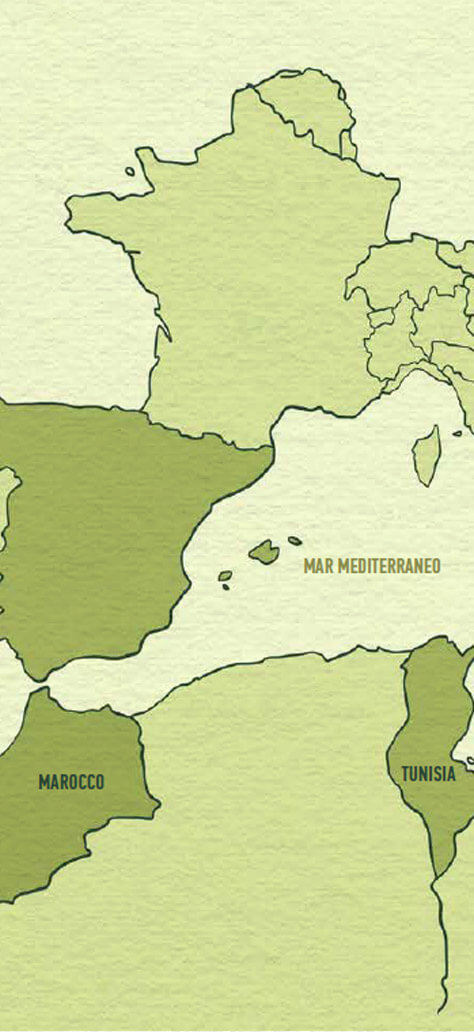
We select our best olives from the entire Mediterranean area.

Our Olives
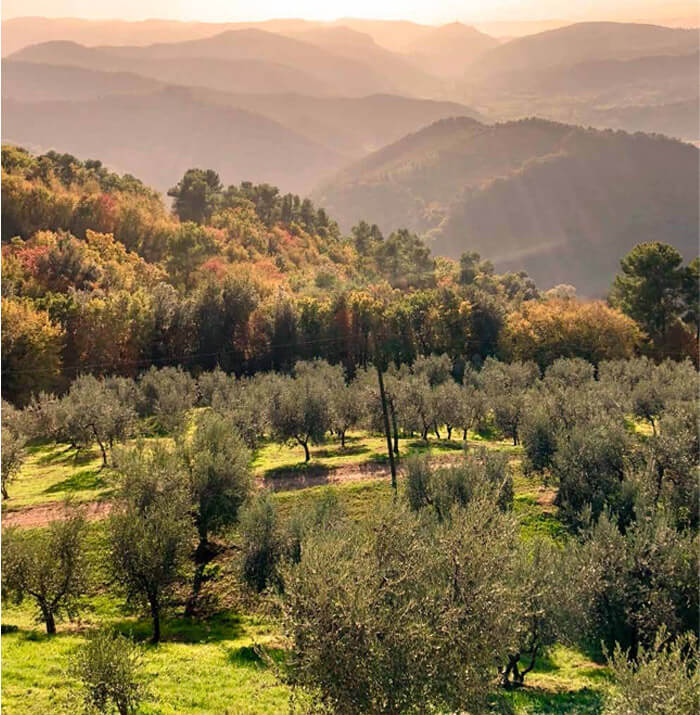
Among variety of trees in the Mediterranean Seas, olive trees are for sure the most iconic ones thanks to their story and charm.
They have been grown since ancient times and different kind of weathers and terroirs created a wide range of cultivars.
Today, there are over one thousand cultivars in the Mediterranean basin. Italy is the country with the highes amount of olives varieties.
Over 500 cultivars grow here, representing the 40% of those existing all over the world. Each cultivar has its own specific features, fragrance, aroma and nutritional properties.
That is why we use olives coming from the whole Mediterranean basin. In this way, we can take inspiration from a very wide range of flavors when creating our best blends.

discover our
cultivars
Coratina
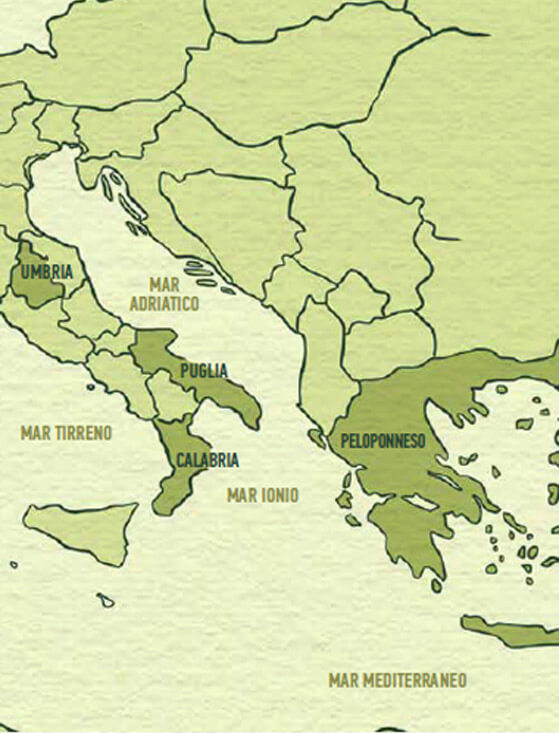
This variety can adapt to several territories. However, the best terroir for it is in Apulia.
This cultivar has a strong character, it is cold-resistant, it is very resilient production-wise and is rich in polyphenols.
When the crops are particularly good, olives are so big that they are also used to make pickled olives. Growing area: Apulia
Flavor: it shows a medium-intensity fruity aroma typical of unripe olives.
It has a strong and persistent bitter taste, which is accompanied by an agreeable pungent taste.
It has agreeable hints of leaves and artichokes, which make the olive oil quite robust.
Moraiolo
MORAIOLO
This is a very rustic cultivar, which perfectly adapts to hills.
Its productivity is high and constant.
It is very much appreciated for its distinctive fruity and fragrant flavor as well as for its content of squalene and polyphenols.
Growing area: Umbria
Flavor: it is very distinctive and is characterized by a high content of polyphenols, which are very good for our health.
It is very fruity and has an elegant aroma with fresh, green and vegetal notes. You can taste its intense vegetal notes while appreciating its bitter taste accompanied by a strong and persistent pungent taste.
Koroneiki
Greek olive oil stems from ancient myths.
As a matter of fact, in the old days it was considered a gift from the Gods and olives were seen as a sacred fruit.
Koroneiki variety is grown in the semi-mountainous areas of western Peloponnese. Its olive trees are always fertile, drought-resistant and therefore as self-sufficient as wild olive trees. They are used to produce superior-quality
and low-acidity olive oils only.
Growing area: Peloponnese and Island of Crete Flavor: it stands out for its refined and elegant character. It is a fruity olive oil of medium-light intensity.
It shows a soft palate and it can smoothly go from a sweet first impact to increasingly bitter and pungent notes.
Everything is perfectly balanced and harmonious and you can taste fresh and green olives with artichoke and celery notes. In the finish, the taste is moderately bitter and recalls green almonds.
OGLIAROLA BARESE O CIMA DI BITONTO
While being very rustic, this cultivar is sensitive to frost and sea winds and has a medium and alternating productivity. The olive oil is highly appreciated and is very typical in the Bitonto area.
Growing area: Apulia
Flavor: it is very fruity with hints of olives and other ripe fruit.
Its pungent taste is rather intense and it has agreeable almond, tomato and apple hints.
This variety is grown in Calabria, where thriving olive tree groves can be found up to 800m altitude.
Its productivity is high and constant.
It is characterized by a gradual ripening of olives, which makes it perfect for green and black table olives as well as olive oil pressing.
Growing area: Calabria
Flavor: it is very delicate, moderately bitter, pungent and moderately sweet, with light almond hints.
HOJIBLANCA
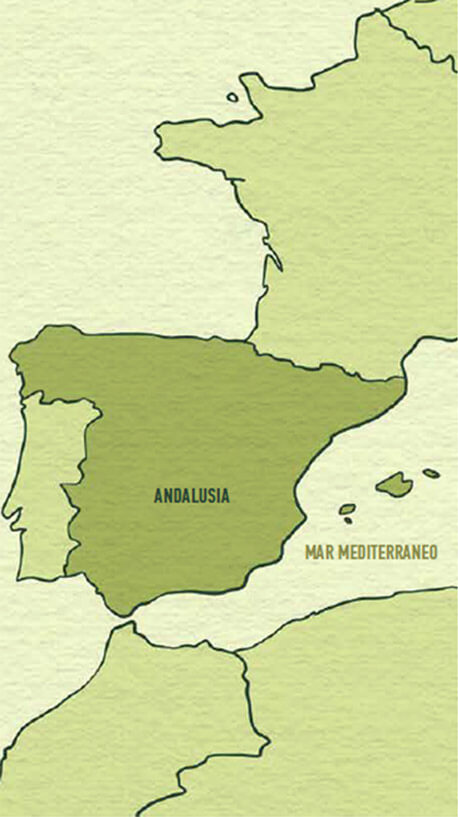
This is a very high-profile cultivar. 18 million olive trees are currently being grown in Andalusia, where they grow in harmony with the surrounding environment.
These trees can adapt to extreme soils and weather, cold winter and chalky soils, where other cultivars may not survive.
Growing area: Andalusia
Flavor: it is moderately bitter and has medium levels of oleic acid, that is 65-70% of the total of fatty acids.
This is the reason why it is particularly resistant to oxidation and high temperatures.
Picual
This is a very rustic cultivar, which can easily adapt to different weathers and soils.
It has an excellent nutritional profile with a very high content of oleic acid (monounsaturated fat), which can exceed 80% of its lipid profile.
This makes it one of the most stable olive oils in terms of oxidation and rancidity.
Growing area: Province of Jaén, Cordova and Granada
Flavor: it has a bitter taste and, when it is young, it is particularly pungent.
Due to its early harvest, herbaceous notes, such as olive tree leaves, grass,
fig, tomato and tomato plant notes, stand out. It is a heavy-bodied olive oil and those who are not used to the taste of olive oil itself might find it a bit hard to enjoy it.
You can easily tell when it is added to a dish, even if there is just a drizzle of it.
Arnequina
While in the past it was only grown in the provinces of Lérida and Tarragona, in the last few years it has been grown all over Spain, particularly in Andalusia, Castilla-La Mancha and near Portugal.
Its olives are pretty small, its olive trees production is quick and good, and these trees easily adapt to new groves.
Growing area: Andalusia and Alentejo (Portugal)
Flavor: it has a sweet taste, without any bitter aftertaste.
It perfectly suits those who are looking for an olive oil with a delicate taste. The fact the some arbequina olive oils might have a slightly pungent taste is just the result of their freshness.
Cornicabra
This rustic cultivar is native to Castilla-La Mancha region and the olive oils produced using it are very stable and have a pretty strong character.
Growing area: Ciudad Real, Toledo, Madrid, Badajoz and Cáceres.
Flavor: thanks to its character, this cultivar is very much appreciated.
It is robust, bitter and pungent, with herbaceous notes and apple hints.
chemlali
It is a little-known fact that in Tunisia, where 1/3 of the surface used for agriculture is covered by olive trees, Chemlali cultivar accounts for 70% of them.
In this country, 80% of the organic industry is made up of olive oil, even though, considering the weather and the use of varieties which well adapt to its climate and soil, the whole Tunisian olive-growing process is carried out using the least amount of chemicals possible.
Growing area: Center and Southern Tunisia Flavor: when they start ripening, these olives create a very fruity olive oil, which is moderately bitter and slightly pungent, with green almond, fresh grass and – though rarely – apple hints.
When olives are perfectly ripe, olive oil becomes soft, it has a moderately fruity taste and the green almond hints are replaced by the aroma of dried almond or almond paste.
picholine marocaine
With their products – which have been used
for centuries -, their endless properties against soil erosion as well as their ability to enhance agricultural lands and favor peoples settlement on mountains, olive trees now represent the main fruit production chain in Morocco and account for 65% of the trees planted on the national territory. Over 90% of the olive-growing heritage belongs to the Picholine marocaine variety.
Growing area: Center and Southern Tunisi
Flavor: it is a fruity olive oil of medium-light intensity, with vegetal notes recalling apple and banana.
It shows a smooth, soft and rounded palate, with a vegetal taste recalling almond and wild herbs as well as well-balanced and harmonious bitter and pungent notes.
In the finish, the aftertaste shows hints of wild herbs and a slightly pungent taste.